
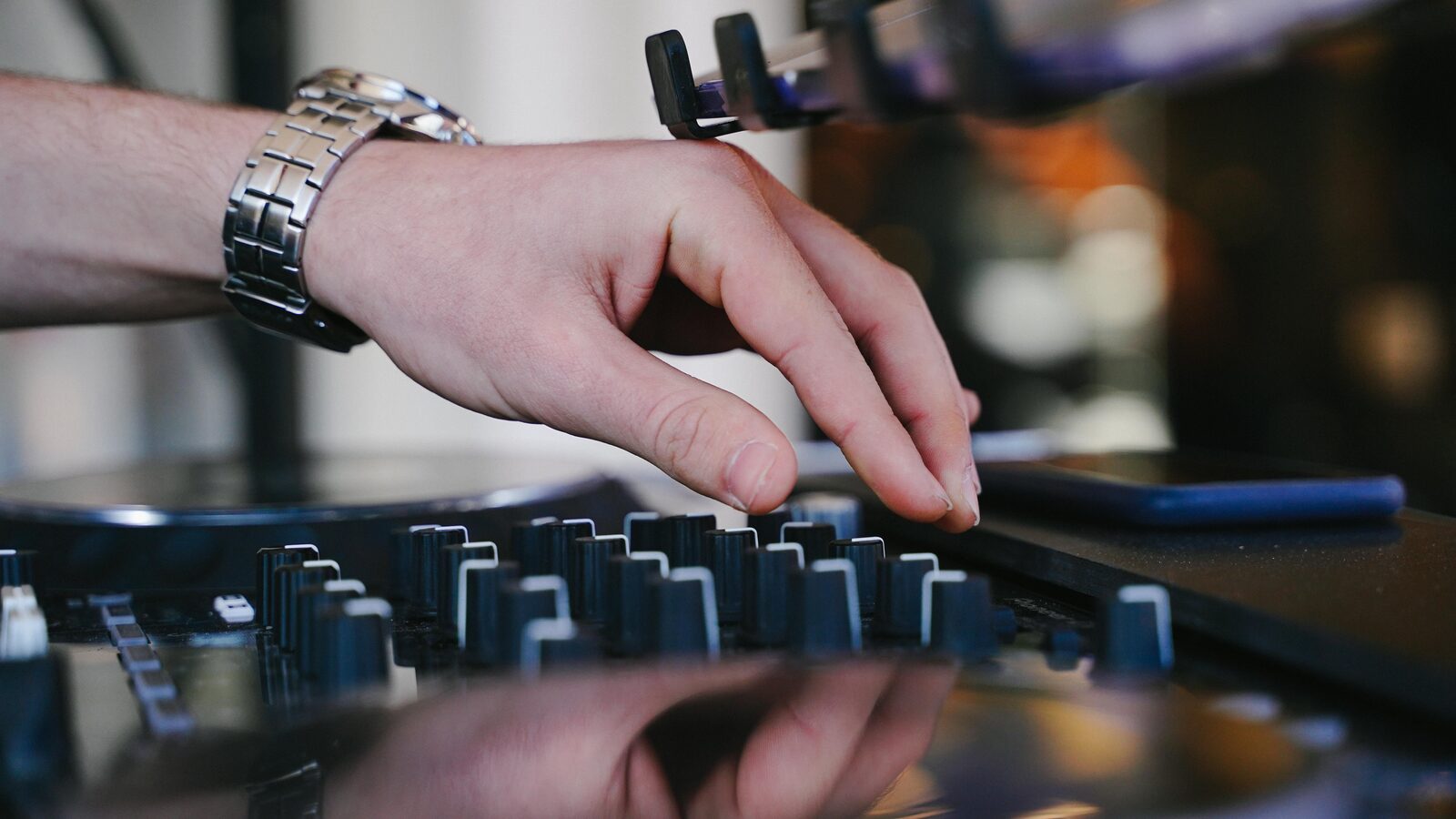
It's 4:30 AM at an after-party. A DJ who's been doing this since 2003 is two beers in, explaining to a 24-year-old why the sync button is killing the craft. The 24-year-old already played a 200-person warm-up slot tonight. He's checking his phone.
Here's the take neither of them wants to hear: the argument is dumb, and they're both missing the point. Sync isn't cheating. Bad track selection is. Has been the whole time.
What does the sync button actually do?
Sync reads the beatgrid of two tracks and locks their tempo and phase together so the kicks land on time. That's it. It doesn't pick the next track, it doesn't read the room, and it doesn't know the difference between a floor that wants a build and a floor that's about to walk to the bar. Serato, Rekordbox, and Traktor all ship it standard now — it stopped being a novelty feature somewhere around the mid-2010s and became a normal button on a normal piece of gear.
Getting sync to work cleanly still isn't zero-effort. A messy beatgrid makes sync drift and stutter just as badly as a bad manual mix, which means the "just press a button" framing undersells the prep work sitting underneath it.
Why some DJs still call it cheating
The objection isn't really about the button. It's about what beatmatching by ear used to certify. For a couple of decades, mixing two records together cleanly — by feel, by ear, no software doing the math — was the entry fee to being taken seriously. You put in the hours on turntables that didn't forgive you, and the payoff was a skill nobody could fake in front of a crowd.
Sync breaks that certification. Anyone can hit the button and get a technically clean transition without the years behind it, and that feels, to a DJ who paid the entry fee, like the fee got waived for everyone after them. It's a real feeling. It's just aimed at the wrong target — because the thing that actually separated a good DJ from a bad one was never the millisecond alignment of two kick drums.
The version of this argument that plays out at 4:30 AM after-parties has been running since turntables gave way to CDJs, then CDJs gave way to controllers with a sync button built in as standard. Every generation of gear gets accused of making the previous generation's hard-won skill optional. Vinyl DJs said the same thing about CDJs having pitch displays and looping. The complaint isn't really new. It just has a new button to point at this time.
Sync is not cheating. Bad track selection is.
Here's the case. Beatmatching by ear was never the craft — it was the toll booth in front of the craft. The actual skill is knowing which track to play next, for this room, at this exact minute, and building a set that survives contact with a crowd that doesn't behave like your practice sessions at home. Sync automates the toll booth. It does nothing for the part that was always the hard part.
DJ Craze, a three-time DMC World DJ Champion, has been openly pro-sync in public for years — he's said flatly that he doesn't understand why more DJs don't use it, and framed it as freeing him up to do more creative work on the decks instead of babysitting a pitch fader. That's not a bedroom DJ looking for a shortcut. That's someone with a resume most purists would kill for, saying the quiet part out loud.
The counter-argument is fair on its own terms: learning to beatmatch by ear teaches timing, phrasing, and a feel for tempo you carry into everything else. Fine — build that skill on practice decks at home, on your own time. At a paying gig, in front of a room that doesn't care how you got there, your job is picking the right next track and not crashing the train. Nobody has ever walked off a dance floor because the beats were sync-perfect instead of ear-perfect. Plenty of dance floors have emptied because the DJ played the wrong track at the wrong moment with technically flawless beatmatching underneath it.
Picture the version of this that actually happens: it's 1:47 AM, the dance floor's gone half-empty, and the bride's uncle has commandeered the request sheet. The DJ has thirteen minutes to either save the room or lose it for good before the 2 AM cutoff. Nobody in that room is thinking about whether the next transition gets synced or eared. They're finding out, in real time, whether this DJ knows which track bridges a dying floor back to full. That's the whole test. Beatmatching method isn't on the rubric.

Does using sync actually get you booked — or rebooked?
This is the part the forum threads never touch, because forum threads are about pride, not payroll. A promoter deciding whether to rebook you isn't backstage with a stopwatch checking whether your transitions were manual or synced. They're watching whether the floor stayed full, whether you read the shift from dinner-hour lounge into peak-time chaos without losing the room, and whether you showed up prepared. None of that shows up on a beatgrid.
Ask a working club or wedding DJ what actually got them rebooked and you'll get answers about set arcs, reading a crowd that doesn't match the brief, and having the right edit ready when the vibe pivots hard at midnight. You will not get "my beatmatching was ear-only." Bookers pay for the outcome. Sync is invisible in that outcome, right up until it lets you focus on decisions that aren't.
Flip it around: a DJ who beatmatches flawlessly by ear but reads a room badly — plays the loudest track in the bag at 9 PM instead of building into it, ignores a floor that's clearly drifting toward the bar — doesn't get a pass for the manual beatmatching. They just don't get the callback. Meanwhile a DJ leaning on sync who nails the arc, adapts when the brief doesn't match the room, and leaves with zero reasons for the promoter to book someone else next month gets the residency. The booking inbox doesn't run a beatmatching audit. It runs on whether the room stayed full.
Should you learn to beatmatch by ear before you use sync?
Probably, and not because it's more honest — because it's a useful fallback. Gear fails. A CDJ hiccups, sync drifts because someone else's laptop mangled the beatgrid, and the DJ who's only ever pressed the button is stuck mid-set with no plan B. Learning to beatmatch by ear once, deliberately, on practice tracks, means you're never actually dependent on the button — you're choosing it.
That's a different posture than a beginner who never learns the manual version and just hopes sync always works. It usually does. "Usually" isn't a word you want to be testing live at 2 AM in front of 200 people. Learn it once. Then decide, gig by gig, whether pressing the button buys you more than it costs.
Practically, that means running a handful of practice sets a week with sync off, on tracks you already know cold — house in the 120–128 BPM range is a forgiving place to start, since the tempo pocket is wide and the phrasing is predictable. Once matching by ear stops taking conscious effort, sync stops being a crutch and becomes exactly what it should be: one option among several, not the only one you know how to reach for.
What sync doesn't do for you
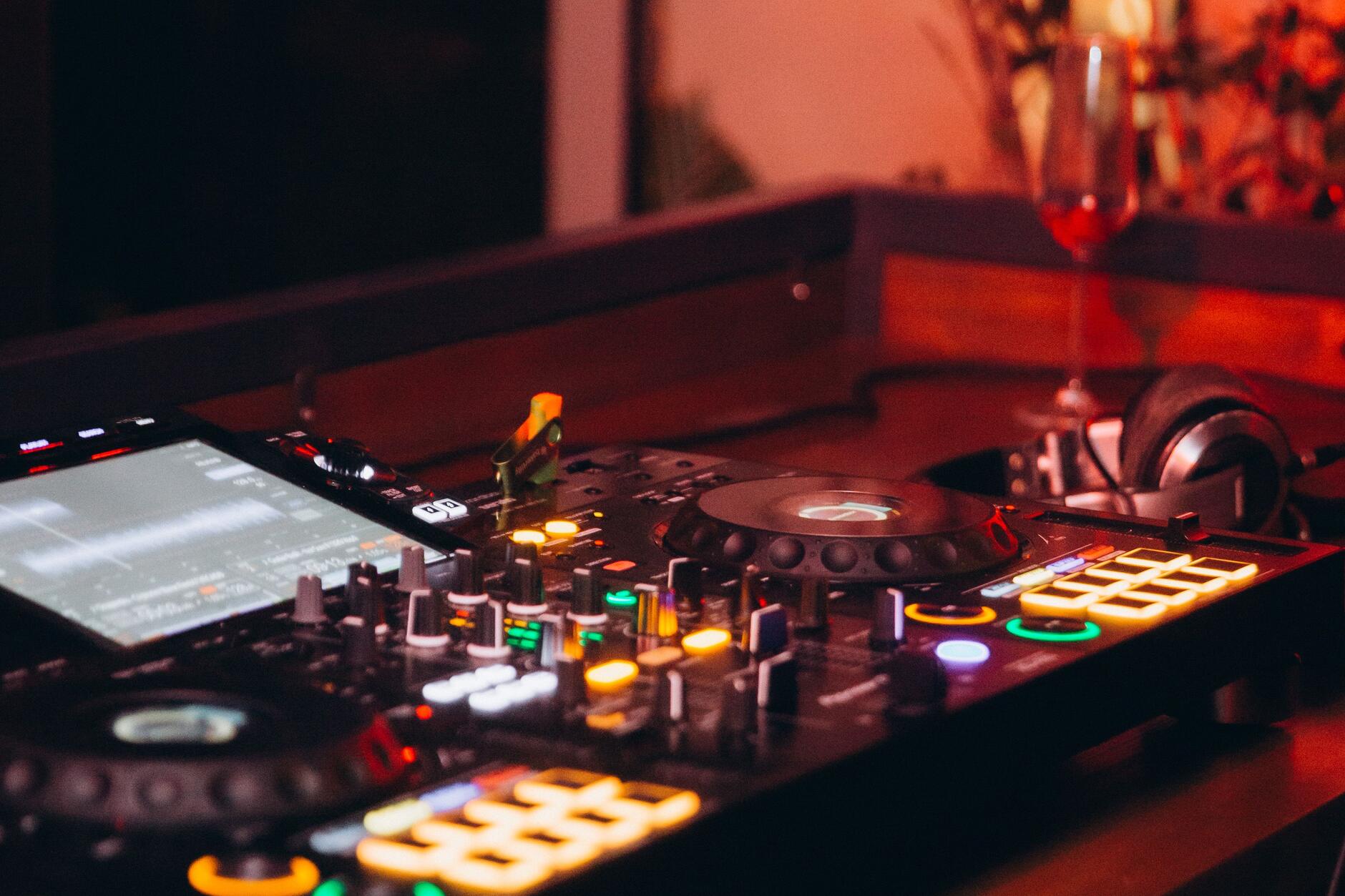
Sync will not select your next track. It will not tell you the room's energy just dropped because a big group left for the smoking area. It will not know that the request sheet has three conflicting instructions and someone still expects you to nail all of them. That's phrase matching territory, not beat-alignment territory — knowing a 32-bar phrase is about to end and landing the next track's energy exactly there matters more than whether the kicks are sample-accurate.
It also won't cover for a thin library. A DJ with perfect sync and eighty tracks in one lane still runs out of road the moment the room asks for something outside it — the corporate gig that suddenly wants a clean radio edit, the wedding block that needs a BPM-shifted bridge between two songs that don't naturally sit together. Sync handles the millisecond alignment on whichever track gets played. It has no opinion on whether that track was the right call in the first place, and it doesn't grow the library that makes the right call possible more often.
The technical polish sync buys you is real, and it's also the smallest part of the job — the part a room never actually notices when it's working.
When sync is the right call — and when it isn't
Use it when it frees up attention for something that matters more: cueing the next transition while reading the floor, running three or four decks at once, layering an acapella over a different track's instrumental without splitting focus between two pitch faders. That's the "creative headroom" argument, and it's a real one — not a rationalization.
Skip it, or at least don't lean on it blind, when the beatgrid is untrustworthy (bad analysis, a track with a tempo shift mid-song) or when the gig is exactly the kind where gear fails and you need the manual fallback in your hands, not just in theory. A USB stick handed over by a fill-in DJ, folder named "stuff," half the tracks unanalyzed — that's not a hypothetical, that's a Tuesday, and it's exactly the set where blind trust in sync gets exposed fastest. Neither case is about cheating. Both are about which tool actually serves the room in front of you.
Frequently asked questions
Is using sync considered cheating by professional DJs?
Increasingly, no. Working DJs across genres use it openly, including well-known names like DJ Craze. The DJs who still call it cheating tend to be the ones who paid the beatmatching "entry fee" themselves and feel that cost should still apply to everyone.
Does the crowd care whether a DJ uses sync?
No. A dance floor responds to track selection, energy management, and timing — not to whether the tempo lock was manual or automated. Nobody has ever left a dance floor because the beatmatching was technically sync-assisted.
Is sync bad for new DJs specifically?
Not inherently, but leaning on it before learning the manual version leaves you with no fallback when gear fails. Learn beatmatching by ear once, deliberately, then use sync as a choice rather than a crutch.
What's more important than beatmatching for getting booked?
Track selection and reading the room. A promoter deciding whether to rebook someone is watching whether the floor stayed full and the set adapted to a crowd that didn't behave like the plan — not whether the beats were aligned by ear or by software.
Do Serato, Rekordbox, and Traktor handle sync the same way?
The core function is the same across all three — lock tempo and phase using the analyzed beatgrid — with minor differences in how aggressively each locks phase versus leaving room for manual override [VERIFY: current per-platform sync behavior before citing specifics]. None of those differences change the underlying argument: sync handles alignment, not track selection.

That 24-year-old at the after-party had a 200-person warm-up slot that night. The 2003 DJ hadn't had a paid gig since 2019. Draw your own conclusions about which argument actually mattered.
If you want to hear what a set built on track selection instead of button-pressing purity actually sounds like, the sets are on the homepage. The companion piece on how to get booked as a club DJ picks up exactly where this one leaves off, and more breakdowns like both live on the blog.
Image credits. All photos via Pexels under the Pexels free-to-use licence. Hero: Maor Attias. Inline 1: Benjamin Lehman. Inline 2: Fidan Mammadli. Inline 3: Maor Attias.