
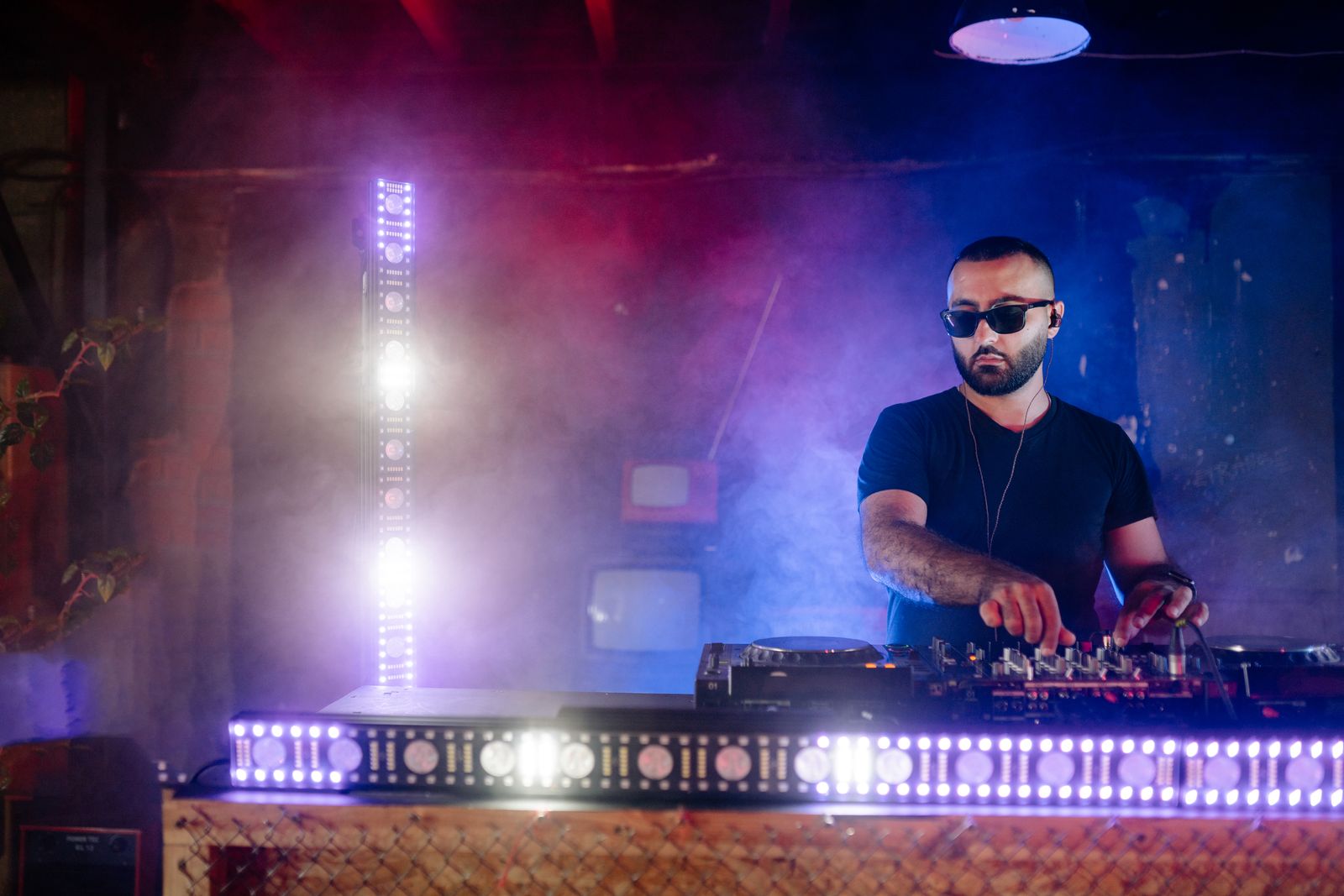
Three days before the wedding, the planner sends a spreadsheet. Four thousand rows, three columns: must-play, do-not-play, play-if-requested. The bride's grandmother's wedding song from 1962 sits in the must-play column. "Don't Stop Believin'" somehow sits in both columns at once. Somewhere around 12:45 AM, the bride is going to request "Mr. Brightside" — which is signed, confirmed, and sitting in the do-not-play column with her own initials next to it.
One DJ is going to cover all of that in a single night: 1962 through whatever's charting this month, dinner-hour restraint through last-call chaos, a bride's own rules broken by the bride herself. That job has a name. It's open format.
What does "open format DJ" actually mean?
Strip the jargon and it's simple: an open format DJ plays across genres in one set instead of staying inside one lane. A house DJ plays house. A hip-hop DJ plays hip-hop. An open format DJ plays whatever the room and the night actually need — house at 11 PM, hip-hop at midnight, a curveball 2000s pop moment at 12:45 because the bride asked nicely and the room wants it too.
The term gets treated like a specialty, a genre of its own sitting next to house and techno on a lineup poster. It isn't one. It's closer to a default setting. Ask ten working wedding, club, or corporate DJs what they actually play in a typical week and most of them will describe some version of open format without ever reaching for the phrase — because nobody hired them to be a house purist for six straight hours.
Open format dj meaning, in six words: range is the job description.
Open format isn't a genre — it's the job
The industry still talks about "open format" like it's the consolation prize — the label you get stuck with if you never committed to a lane. That framing has it backwards. For the wedding DJ, the corporate DJ, the club DJ working a Friday-into-Saturday double, open format isn't the fallback. It's the entire job. Nobody books six hours of pure house for a 200-person office party. Nobody wants a hip-hop purist running a bridal party's grand entrance straight into last call.
A genre specialist can build a deeper, weirder, more technical set inside one lane than an open format DJ ever will, and that's a real skill worth respecting. But "deeper in one lane" and "bookable for most of the gigs that actually exist" are two different résumés. Most of the paying work — weddings, corporate events, multi-room clubs, private parties — goes to whoever can move across a full night without handing off to a second DJ. That's not a lesser skill parked next to real DJing. It's the version of the job most working DJs are already doing, whether the booking email says "open format" or just says "DJ, five hours, keep it moving."
The counter-argument is fair: a strict single-genre residency exists, and it's a legitimate lane to build if that's the work you actually want. Go build it on purpose. But treating open format as the B-team version of DJing gets the hierarchy backwards. It's the format doing most of the actual paid work in the industry, deep-cut specialist nights included.
What's the difference between an open format DJ and a specialist?
Genre specialist. Goes deep in one lane — house, techno, drum & bass, whatever — and gets booked into nights built around that lane. The audience already wants what's coming before they walk in. The skill ceiling is technical depth: obscurer selections, harder transitions inside a narrow tempo range, a deeper crate in one direction.
Open format DJ. Gets handed a room that wants four or five different things across one night and has to make all of them sound like one coherent set, not four different DJs sharing a booth. The skill ceiling isn't technical depth in a single lane — it's range plus judgment.
The practical differences show up fast:
- A specialist's library is deep and narrow. An open format DJ's library is wide and current across categories — house, hip-hop, pop, Latin, throwback — because any of them might get called on in the same set.
- A specialist reads the room within one genre's floor and ceiling. An open format DJ reads the room across genres, which means recognizing when "more energy" means a faster house track versus when it means switching genres entirely.
- A specialist's transitions live inside a tight BPM range. An open format DJ's transitions often cross BPM ranges — a dinner-hour lounge block around 90 BPM climbing into a 124 BPM house peak — which is a different technical problem than mixing two house tracks into each other.
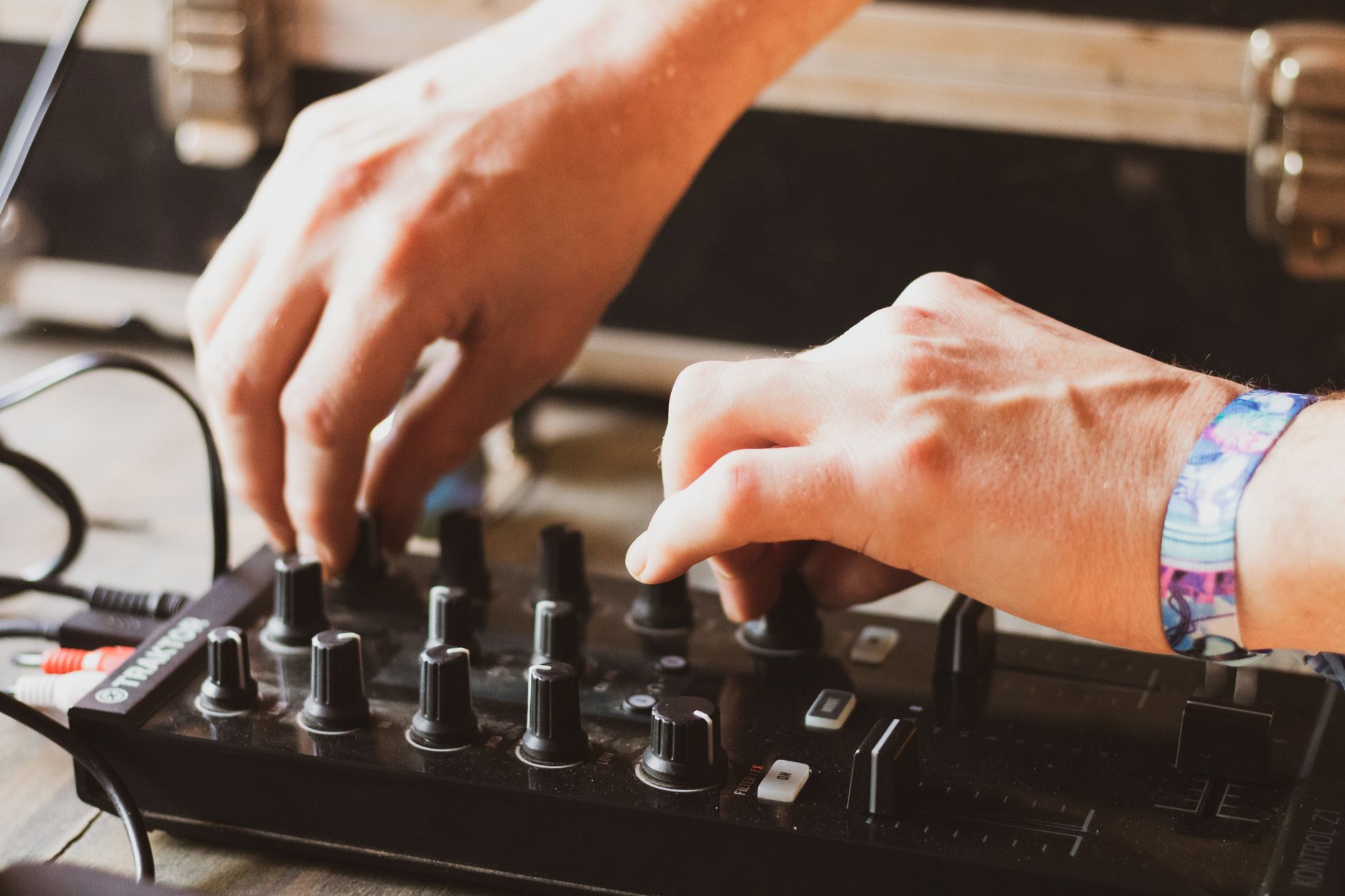
The skill that actually matters — reading the room, not the record bag
Ask what makes an open format DJ good and most answers point at the wrong skill. It's not library size (a huge catalog means nothing if none of it is the right track for 9 PM at a corporate dinner). It's not raw mixing technique either — plenty of DJs can beatmatch cleanly and still lose a floor by playing the right track at the wrong minute.
The actual skill is reading a room in real time and making a genre call before the floor tells you you're wrong. That's judgment, not muscle memory. It shows up as sensing that a floor sitting at 75% energy for the last ten minutes is drifting toward empty, and knowing whether the fix is a bigger track in the same lane or a full genre pivot. Get that call wrong twice in one set and you've lost a room you weren't getting back that night.
This is also where phrase matching earns its keep over pure beat alignment — knowing that a 32-bar phrase is about to end, and that the energy of the next genre needs to land exactly there, matters more than whether the kicks are millisecond-perfect. Sync handles the technical alignment. Nothing handles the genre call for you.
The tell that separates a confident open format DJ from one still guessing: they check the room every few tracks, not just when something's clearly gone wrong. Phones coming out mid-song, a cluster drifting toward the bar, someone mouthing along a beat before the drop lands — those are the cues that decide whether the next track holds the current genre or breaks for a new one. Waiting for an empty floor to notice a problem means the problem started three tracks earlier.
How open format DJs build a set that survives contact with a real room
Range doesn't get built the night before a gig. It's an accumulation: every clean edit grabbed after a set that almost had the right version, every track re-tagged when the metadata lied about the genre, every corporate-safe instrumental saved because someone's regional VP requested "something with no lyrics" mid-set. By the time an open format DJ is actually good at the job, their library isn't bigger than a specialist's for the sake of being bigger. It's built in the specific shape of the gigs they play.
The prep habit that separates a working open format set from a shaky one: scouting the genre transitions before the gig, not during it. A DJ walking into a wedding already knows the room will ask for a dinner-hour build into a peak block into a slow-down-then-close arc, so the genre pivots get planned in advance — which two tracks bridge lounge into house, which track can open a Latin block without stalling a floor that was just moving. Winging a genre change live, with a couple hundred people watching, is how ninety seconds go missing that nobody gets back.
(Your CDJ will still hiccup on the one track you forgot to duplicate. That's not the genre pivot's fault. That's just gear.)
That prep also means keeping alternates on hand for the requests that don't match the brief. A clean radio edit of a track that's technically banned on paper but obviously wanted in the room, a BPM-shifted version that bridges two blocks that otherwise don't sit next to each other, an instrumental for the twenty minutes someone won't stop talking near the booth. None of that shows up in a set list until the night it saves one.
Back to that spreadsheet: an open format DJ working that wedding doesn't treat the grandmother's 1962 song and the bride's off-the-record Mr. Brightside request as two separate emergencies. They're the same job, just two edges of the range the DJ already built for.
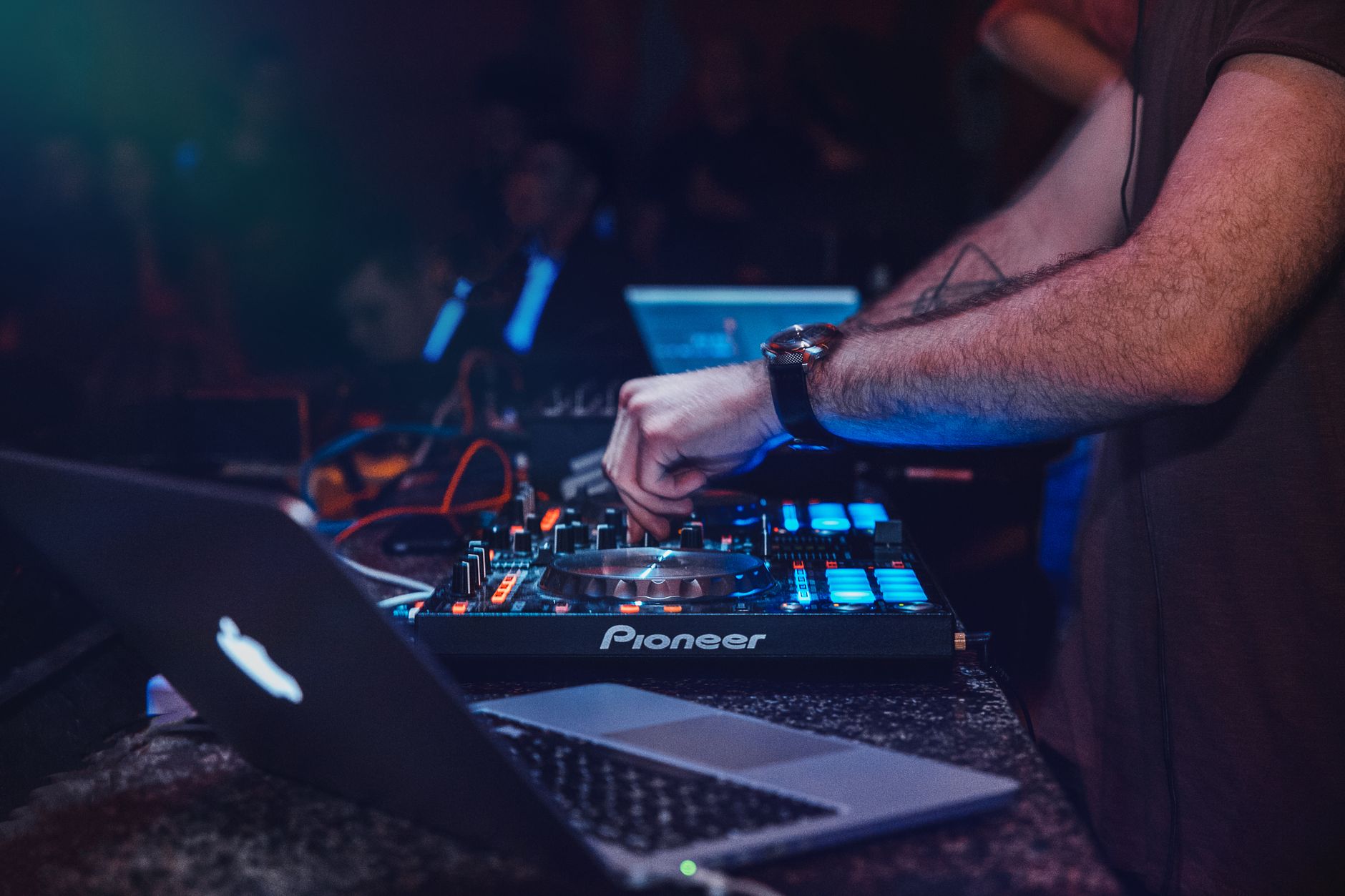
Do you need to be open format to get booked?
Depends which booking. A single-genre residency at a club built around one sound will hire — and should hire — a specialist. The audience is there for the lane, and diluting it doesn't help anyone. But that's a narrow slice of the total paid work in the industry.
Weddings, corporate events, multi-room clubs, private parties, most bar residencies — the overwhelming majority of gigs that pay rent go to whoever can run a full night without a hand-off. So: no, you don't need to be open format to get booked at all. You need it to get booked often. A specialist plays fewer nights that fit their exact lane. An open format DJ says yes to more of the emails that land in the inbox, because more of those emails are, functionally, asking for range — whether the words "open format" appear anywhere in them or not.
That's also why the lineup posters and the booking inbox don't always agree. A poster wants a clean genre tag because that's how a night gets marketed. A booking inbox wants someone who can handle whatever the actual crowd turns into after 11 PM, tag or no tag. Open format DJs get hired out of the second category far more often than the first.
Frequently asked questions
What genres does an open format DJ play?
Whatever the room needs across a single night — commonly house, hip-hop, pop, R&B, Latin, and throwback decades, moved between rather than picked from. The exact mix shifts by gig type: a wedding leans more throwback and Latin, a club night leans more house and hip-hop, a corporate event leans safer and more radio-edited across the board.
Is open format DJing harder than specializing in one genre?
Different hard, not more hard. A specialist goes deeper inside a narrower lane, which is its own difficulty at the edges. An open format DJ manages more variables at once — more genres, more transitions, more real-time calls about when to pivot. Neither is the easy version of the job.
How do you become an open format DJ?
Mostly by getting booked into gigs that demand it, then building the library and transition habits to survive them. Start by saying yes to the warm-up slots, dinner-hour sets, and mixed-crowd gigs a genre specialist would turn down — that's where the range gets forced, and forced range sticks better than range practiced alone in a bedroom.
Is an open format DJ the same as a wedding DJ?
Overlapping, not identical. Most wedding DJs work open format because a wedding demands genre range across one night. But open format DJs also work clubs, corporate events, and private parties. "Wedding DJ" describes the gig. "Open format" describes the skill set that gig — and plenty of others — actually requires.
The bride signs off on a do-not-play list and then requests the song on it at 12:45 AM anyway. That's not a contradiction an open format DJ has to resolve by picking a side. It's Tuesday. It's the job.
Curious what a set built across a full range of genres actually sounds like? The sets are on the homepage. The companion piece on how to get booked as a club DJ picks up right where this one leaves off, and more breakdowns like both live on the blog.
Image credits. All photos via Pexels under the Pexels free-to-use licence. Hero: Yan Krukau. Inline 1: Bruno Bueno. Inline 2: David Bartus. Inline 3: Trinity Kubassek.