

8 AM. You played until 4. The courier needs a signature for a package you don't remember ordering, so you're awake anyway, and your inbox has done the thing it does every single morning: 40+ new messages, all claiming to be a "dj promo pool," none of them agreeing on what that actually means.
Here's the opinion this article won't hedge on: the DJ industry's promo email economy is broken, and it's broken on purpose. Labels, PR companies, and pools all have an incentive to be in your inbox as often as possible. Nobody has an incentive to be the one email you skip. 90% of what lands is noise, which means the signal-to-noise ratio is bad enough that the actual gold — the one track that would've fit Saturday's set — gets buried under thirty-nine you were never going to play. A working DJ doesn't fix that by reading faster. You fix it by knowing what you're actually looking at before you open a single one.
What is a dj promo pool, actually?
Ask five DJs what a "dj promo pool" is and you'll get five different answers, because the term is doing three jobs at once and nobody agrees which job it's doing in a given sentence.
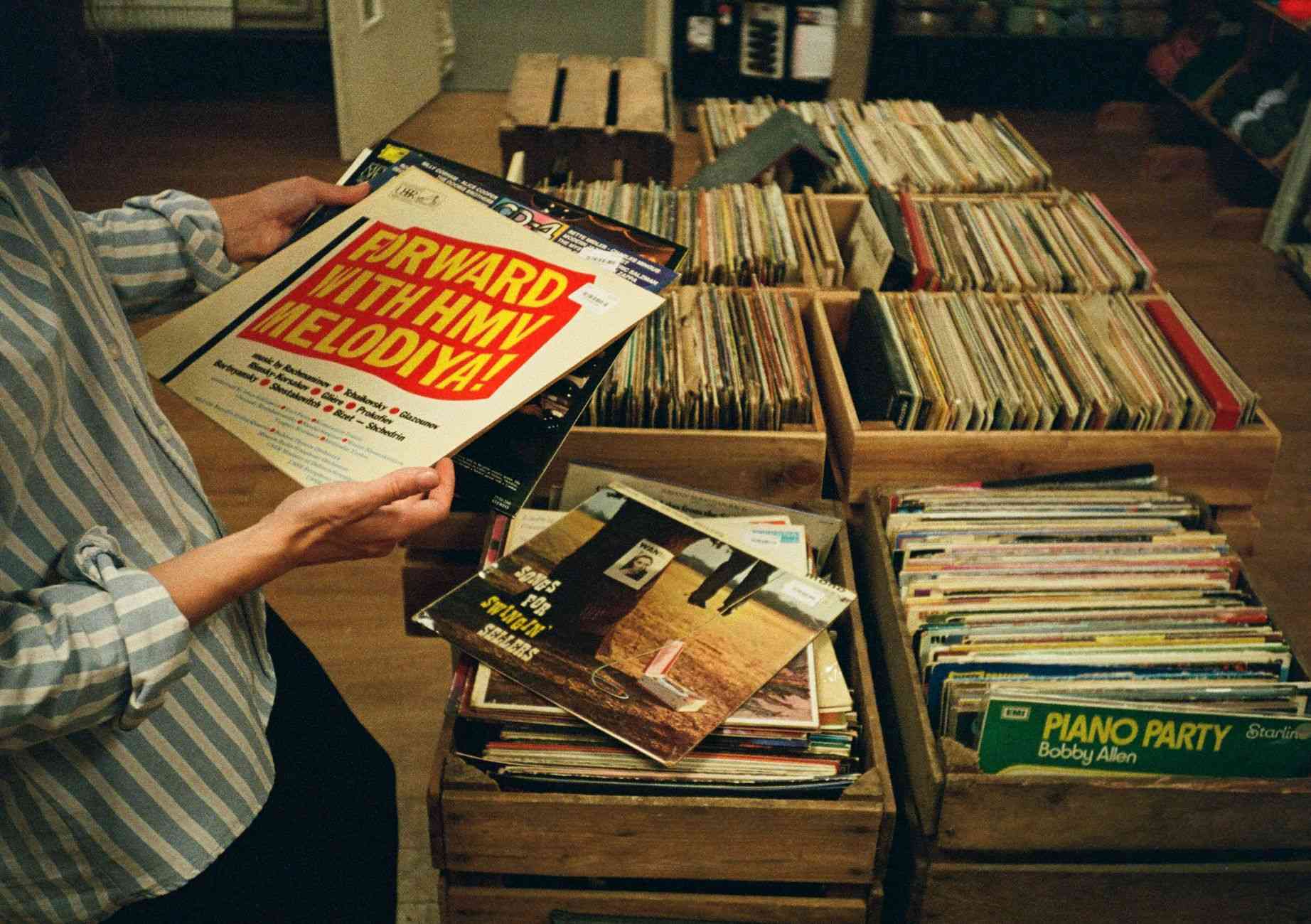
The name comes from an actual pool — a physical one, sort of. In the 1970s, record pools started as a distribution arrangement between labels and club DJs: labels pressed promotional vinyl, mailed it to a regional pool, and DJs in that pool got the records before the public did. In exchange, DJs reported back what worked on the floor — early, unpaid A&R, basically, dressed up as a perk. That feedback loop is the entire reason the arrangement existed. A label that pressed a dud wanted to know before spending real promo money on it.
Nothing about the modern version changed the deal, just the format. Swap vinyl for digital files and the regional mailing list for a login, and a dj promo pool is still a label trying to get new material in front of DJs who'll actually play it and tell them whether it worked.
Is a promo pool the same thing as a paid dj pool?
No, and this is the distinction most of the SERP on this topic gets wrong by lumping everything under one umbrella.
There are three separate things wearing the same name:
- Paid catalog pools. Subscription services — DJcity at $30/month, BPM Supreme at $35/month — that give you a browsable library of DJ-ready edits: clean versions, intros, acapellas, instrumentals. You pay monthly, you get a catalog, no relationship required.
- Free promo/email lists. Labels and PR companies send tracks directly to DJs on a list, no subscription fee, in exchange for exposure and feedback. This is the direct descendant of the original record pool and the one almost nobody explains clearly.
- Hybrid "promo-only" services. Some services sit in between — a lower-cost subscription (around $12/month for one long-running example [VERIFY: current Promo Only pricing]) built specifically around promo-style early access rather than a full back-catalog.
None of these three is "the" dj promo pool. They're three different trades — money for catalog, attention for access, or a smaller fee for a narrower, promo-focused slice — and most working DJs end up running more than one at a time without ever sorting out which is which.

How the email-list side actually works
This is the lane that fills the 8 AM inbox, and it's the one every guide to this topic skips because it's less tidy than "pay $30, get a login."
A label wants a new single played at real gigs before release day. A PR company represents a dozen labels at once and blasts every DJ on its list the same week. A regional promo pool aggregates a handful of PR relationships into one weekly digest. None of these three senders know what you're playing Saturday. All three have the same incentive: send it to everyone on the list, because the cost of one DJ ignoring an email is zero and the cost of missing the DJ who would've played it is real.
That's not a scam. It's just math that doesn't care about your inbox. Multiply three senders by a dozen labels each and the 40+ daily count stops being a mystery and starts being the predictable output of a system where everyone's upside is "send more," and nobody's downside is "send less." (A promo pool with no curation is just a mailing list wearing a nicer name.)
The booking agent who emails you Tuesday morning asking for an "ambient electronic dinner vibe with some upbeat mixed in for later" isn't part of this supply chain, but the same instinct explains why both stacks keep growing. Nobody upstream — not the agent, not the PR company, not the label — is paying a cost for guessing wrong. You're the only one in the chain who pays for a bad guess, which is exactly why the filtering has to happen on your end, not theirs.
The fix the industry never offers is better filtering upstream. The fix that actually exists is yours: decide in advance what counts as "fits a genre you book," skip the rest without guilt, and stop treating every unopened promo as a missed opportunity. It isn't one. It's the system working as designed, and you're allowed to opt out of ninety percent of it.
Is joining a dj promo pool worth the time (or the fee)?
Depends entirely on which of the three you're weighing, and the SERP's favorite answer — a flat yes — is the vanilla one.
A paid catalog pool earns its monthly fee only if the genre depth matches what you actually book. $35 a month for BPM Supreme is $420 a year, which is a fair price for a catalog you draw from weekly and a bad one for a login you check twice a month because three-quarters of what's in it sits outside your lanes. DJcity at $30 a month runs the same math with a hip-hop-and-R&B-leaning catalog.
A free email list costs nothing in money and plenty in attention. The worth isn't in the subscription line, it's in whether the sender's taste overlaps with your bookings often enough that the time spent skimming is less than the time you'd spend hunting for the same track elsewhere. Some relationships clear that bar easily. Most don't, and the ones that don't are the ones worth unsubscribing from without sentiment.
The honest test, either way: pull your last three setlists and count how many tracks actually came from a given pool or list. If it's under a third, you're paying (in money or in inbox minutes) for a bigger haystack, not more needles.
The filter that actually works
Running two or three promo sources without a filter is how a festival-booth email signup from two years ago turns into forty messages you don't remember agreeing to. The filter that holds up over time is boring on purpose:
- Does it fit a genre you actually play? Not "could I imagine playing this," the actual genres on your last five booking sheets.
- Do you already have a version of this track? A different edit of a song you already own isn't new material, it's a duplicate with better branding.
- Would you reach for it at a gig this month, not hypothetically, not "maybe for the right crowd someday"?
Two "no"s and it doesn't survive past the inbox. That's it. No app required, no spreadsheet required, just a rule applied the same way every morning so the decision stops costing you anything.
Is a dj promo pool legal?
Yes, for the legitimate versions of all three. A real record pool or PR-run promo list operates with the label's permission — that's the whole point of the original arrangement, and it's the same reason the practice has survived since the payola era without being the same thing as payola: money or favors never change hands for airplay here, just access for feedback. What's not legal is a site scraping leaked pre-release files and calling itself a pool. The tell is usually in the catalog itself — a legitimate pool's tracks come tagged with the label or distributor's own metadata, a scraped one's don't.
That distinction matters past the legal question, too. A scraped catalog can't guarantee the file is actually the final master, the right length, or even the right song under a correct title. A legitimate pool's whole value proposition is that someone upstream already checked, so you're not the one finding out mid-set.
Frequently asked questions
What's the difference between a dj promo pool and a dj record pool?
Mostly history, not function. "Record pool" is the original 1970s term for the vinyl-era distribution arrangement. "Promo pool" is the modern umbrella term that gets applied to the paid-catalog version, the free email-list version, and everything between. Same lineage, looser label today.
How do you get on a dj promo list?
Mostly by being findable and reliable, not by cold-emailing every label in your genre. PR companies and labels add DJs who already have a track record — gigs, a following, a reputation for playing what they're sent and crediting the source. A booking history and an active presence do more than a signup form.
Do you have to pay to join a dj promo pool?
Depends which one. Paid catalog pools like DJcity and BPM Supreme charge monthly. Direct promo/email lists from labels and PR companies are typically free — the "cost" is the attention you spend filtering them, not a fee.
Is it worth subscribing to more than one dj pool at once?
Only if the genre overlap is low enough that a second pool fills a gap the first doesn't cover. Two pools with near-identical catalogs in the same lanes is two subscriptions doing one job — audit your setlists before adding a second.

So: a dj promo pool isn't one thing, whatever the inbox implies at 8 AM. It's three different trades wearing the same name, and the only move that scales is sorting out which trade you're actually making before you let one more sender decide your morning for you.
The piece on where DJs actually get their music maps all four lanes side by side, including the two stores and the streaming layer this article didn't touch. And once you've decided what earns a permanent slot, how to build a dj music library covers what to do with it after it survives the filter. More of these live on the blog. Hear what actually made the cut. Book a set.
Image credits. All photos via Pexels under the Pexels free-to-use licence. Hero: Maor Attias. Inline 1: Nicholas Derio Palacios. Inline 2: Kristina Bekher. Inline 3: Nano Erdozain.