
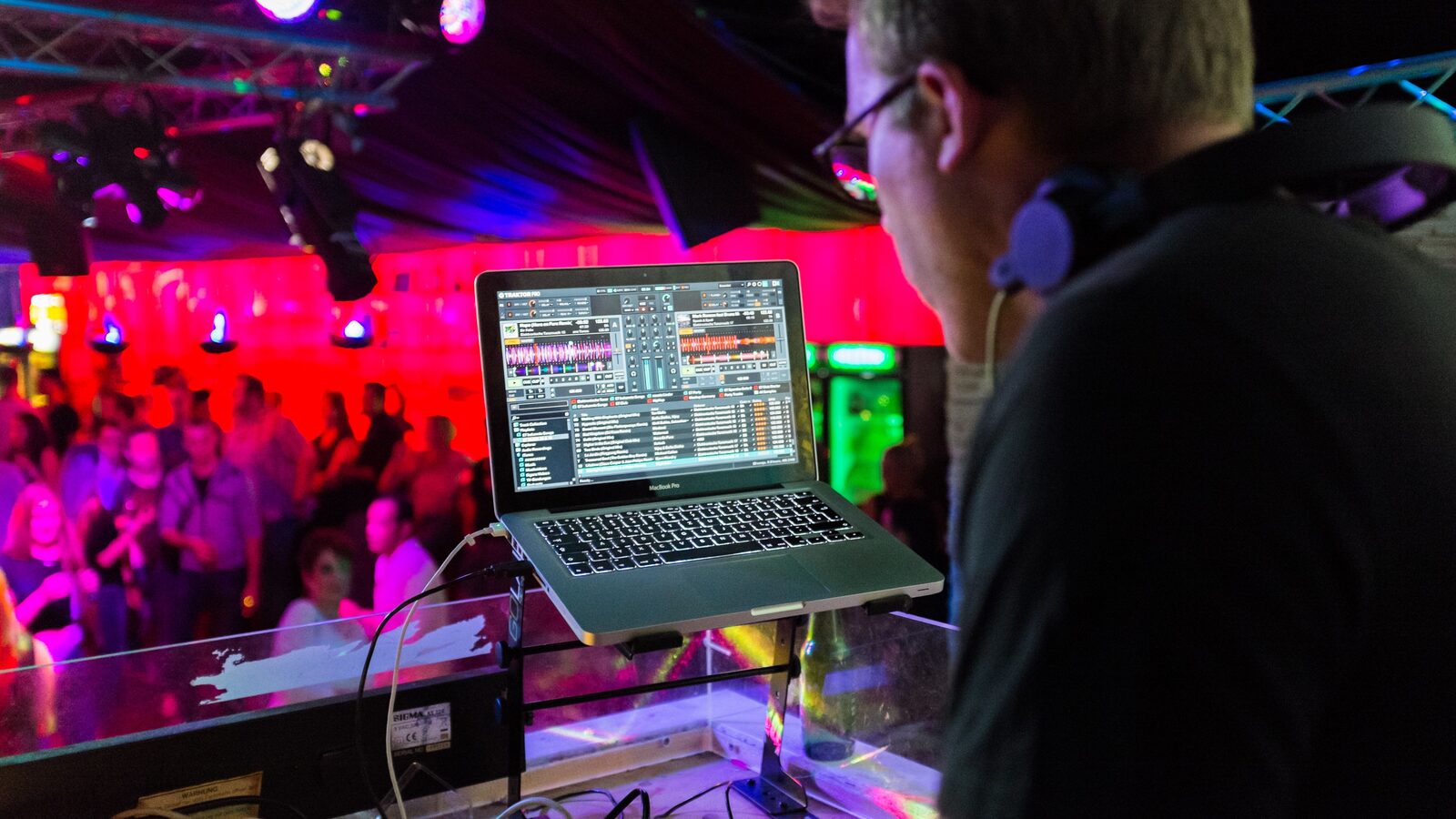
It's 8 AM. You played until 4. The courier needs a signature, so you're awake anyway, scrolling an inbox that filled up overnight — 40+ emails from labels, PR companies, and pools you signed up for at a festival two years ago. Forty-three of those you'll never play. Three are the same track under three different names. Somewhere in there, one is gold, and you'll have to find it before the next gig makes the question urgent again.
So where do DJs get their music? Not from one place, whatever a pool's sales page implies. Working DJs run three or four lanes at once — download stores, curated pools, direct relationships with labels and PR companies, and streaming for discovery only — and the skill isn't picking the "right" one. It's knowing which lane earns which job, and which one is currently overcharging you for it.
The honest answer: four lanes, not one login
Every guide to this question lists the same four options like they're competing for the same job. They're not. Each lane solves a different problem, and the DJs who never run out of usable tracks are the ones running two or three on purpose — not scrolling one catalog and hoping.
- Download stores — Beatport, Traxsource, Juno Download. You own the file, permanently, in full quality. Good for tracks you know you'll play for years. Expensive as your only source if you're prepping four gigs a week.
- Curated pools and promo pools — a filtered stream of new and exclusive material instead of hunting release by release. Worth exactly as much as the curator's taste matches your genres, and not a cent more.
- Direct promo relationships — labels, PR companies, and other DJs sending tracks before they're public, because you're someone they trust to play them right. Free, but noisy, and nobody puts this in the beginner guides.
- Streaming, for discovery only — Spotify, SoundCloud, Apple Music. Great for hearing what's moving. Bad for the actual set, for reasons the venue's wifi will teach you the hard way.
Most working DJs who never scramble for material are running two of these on purpose: a pool or a promo relationship for weekly volume, a store for the anchor tracks that need to be permanent. Streaming sits underneath both as a discovery layer, not a fifth competitor — it's where you first hear the thing you'll later buy, pool-in, or ask a label about directly. The DJs who struggle aren't short on lanes. They're running all four with no plan for which one a given track is supposed to come from, which is exactly how a two-year-old festival pool signup turns into forty emails you don't remember agreeing to.
None of the four is a wrong answer. Running all four with zero filter is the actual mistake — that's how the 8 AM inbox happens in the first place.
Is a DJ record pool actually worth the monthly fee?
Here's the opinion this article won't hedge on: most DJ pools are overpriced for what they deliver, and "overpriced" isn't a vibe. It's math.
BPM Supreme runs $35 a month. That's $420 a year — a CDJ-2000 every eighteen months, for a login. DJcity runs $30 a month for a catalog built mostly around hip-hop and R&B. Neither number is a scandal by itself. The scandal is paying it for a catalog where three-quarters of the tracks sit outside the genres you actually book.
Catalog size is the number every pool leads with, and it's a vanity metric until proven otherwise. 50,000 tracks means nothing if most of them are festival big-room cuts from a phase you haven't played since a corporate gig in 2019. The question that decides whether a pool earns its fee isn't "how many tracks." It's "how many tracks in my lanes, updated weekly, with clean edits I don't have to prep myself." Ask that before the trial ends, not six months into an autorenewal you forgot to cancel.
None of this makes pools a scam. A pool with real depth in your genres replaces hours of digging with a filtered stream, and that's worth real money. It means auditing the fee against your setlists, not against the sales page. Before the trial converts to a paid month:
- Pull up your last three setlists and count how many tracks actually came from the pool.
- Check that count against the pool's real weekly drop sheet in your genres — not the homepage's "100,000+" banner.
- If less than a third of what lands weekly is usable, the fee is buying you a bigger haystack, not more needles.
Download stores: where you actually own the file
Sunday night, prepping for Saturday. You open a store, load a cart with tracks that sounded promising in a thirty-second preview, and check out without a second look. Fourteen tracks at $2.49 each is $34.86 — a month and a half of most pool subscriptions, gone in one cart. Three of those fourteen you'll play once and never again. Two are remixes of tracks you already own at a different tempo. One turns out to be in the wrong key.
That's not a reason to avoid stores. It's a reason to use them on purpose. Beatport, Traxsource, and Juno Download exist because some tracks are worth owning outright: full quality, permanent, no subscription risk if a pool changes hands or drops your genre next quarter. The job a store does well is the anchor tracks — the ones you'll still be playing in three years. The job it does badly is volume. Past ten or fifteen tracks a month, the per-track math stops making sense against any pool with decent genre depth.
Bandcamp deserves a separate mention here, because it breaks the pattern: artists set their own price, often below the big stores, and the money goes to them directly instead of through a platform cut. It's not a volume source either — think of it as the store lane's more independent cousin, useful for the same anchor-track job with a better paper trail on where the money actually lands.
The direct promo pipeline nobody puts in the guide
This is the lane every "where do DJs get their music" article skips, and it's the one that fills the 8 AM inbox: labels, PR companies, and other working DJs sending tracks directly, before they're public, because you're someone they trust to play them right. It's the modern, mostly-legal descendant of payola — the old radio-promo economy that used to run on cash and favors now runs on relationship and reach, and the currency is "will you actually play this at a real gig."
The problem isn't access. It's signal-to-noise. Forty emails a day, most mismatched to your genres or your slot, means the one usable track is buried under thirty-nine you'll delete unopened. (An unfiltered promo pipeline is just a pool with worse curation and a sender who takes it personally when you skip their track.) The fix isn't unsubscribing from everything — some of those relationships are how exclusives reach you before anyone else's Shazam does. The fix is the same filter that should run on every lane: does it fit a genre you play, is there already a version of this track in your library, would you actually reach for it at a gig this month. Two "no"s and it doesn't survive past the inbox.
These relationships don't build themselves overnight, and they don't build from cold-emailing every label in your genre either. They build from the boring, reliable version: playing the tracks you're sent when they're actually good, crediting the source, and being the kind of DJ a label rep remembers as "plays it right" instead of "asked for a freebie and vanished." That reputation is the whole product. Nobody pools that. Nobody can.
Is streaming or vinyl enough to build a set?
Short version: streaming is a strong discovery engine and a weak primary source, and vinyl is a legitimate lane most working DJs use for a different reason than volume.
Spotify and SoundCloud are genuinely useful for hearing what's moving before you'd otherwise catch it — follow labels and artists in your lane and the algorithm does real work for you. Where it falls apart is the booth: club wifi isn't something to build a set around, a track can vanish from a catalog mid-licensing-dispute with zero warning, and the audio is rarely the file quality a store or pool hands you. Use it to find the track. Own the file before it goes anywhere near a set.
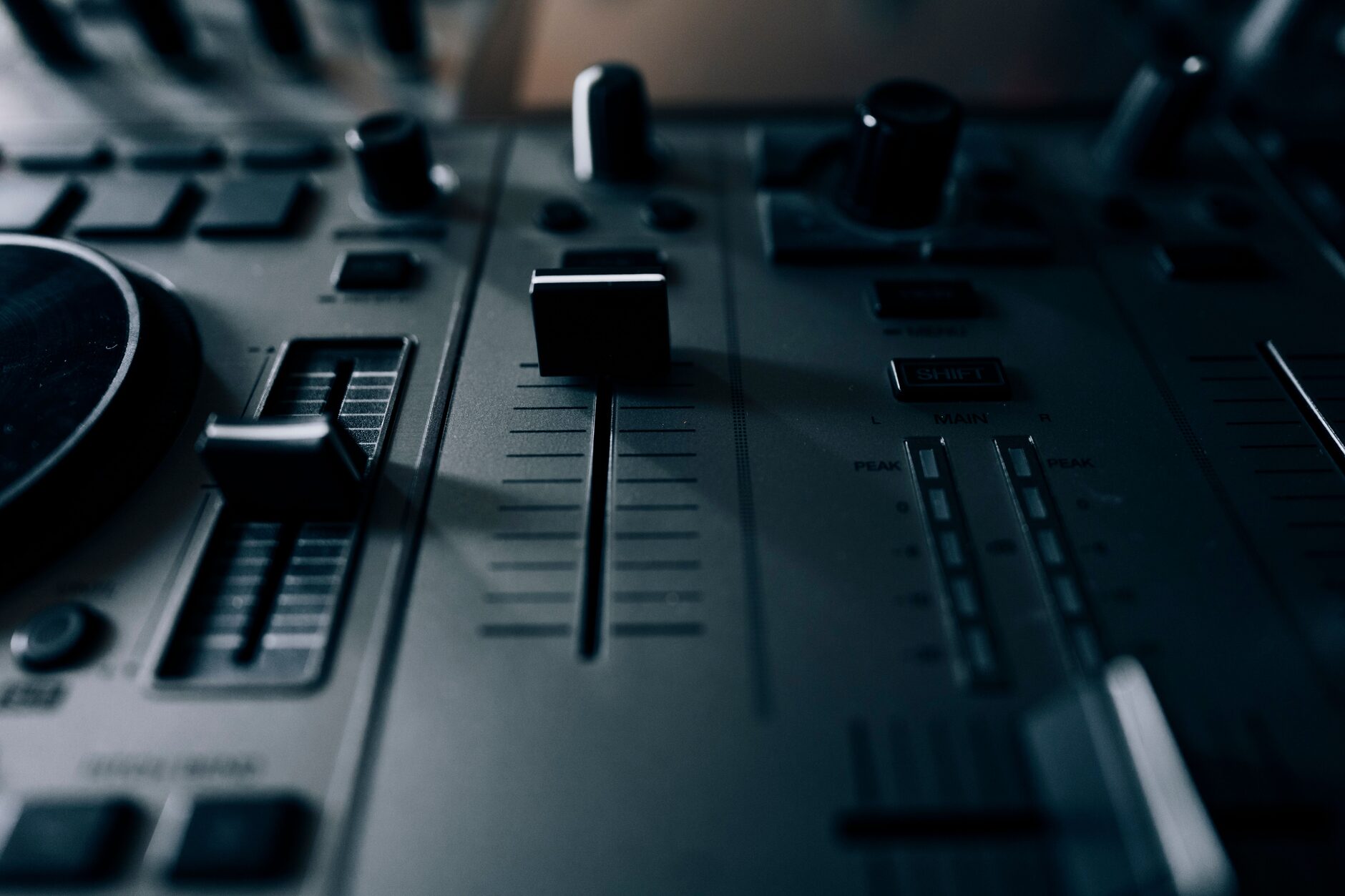
Vinyl digging is different: it's not really competing for volume, it's a specific-genre, specific-feel lane (house, disco, funk breaks) where the physical format still carries weight nothing digital has fully replicated. Record stores and swap events also do something the algorithm can't: put a track in your hands that nobody's feed served you, because a crate doesn't know what you already like. If that's not your lane, skip it without guilt. If it is, treat it as a fifth gear, not a replacement for the first four — you're still tagging, still filtering, still asking whether it earns a slot before it goes in the bag.
Frequently asked questions
Is a DJ record pool actually worth the money?
Only if the genre depth matches what you play. A pool with real weekly depth in your lanes replaces hours of digging and earns its fee. A generic 50,000-track catalog you scroll once and bounce from is a subscription you forgot to cancel, not a tool.
Can DJs use Spotify or Apple Music at a gig?
Not reliably. Streaming is a strong discovery lane — following labels and artists to hear what's moving — but venue wifi, licensing gaps, and inconsistent audio quality make it a weak primary source for the actual set. Use it to find tracks, then own the file before it goes near a booth.
Do labels really send DJs free music?
Yes, and it's one of the least-discussed lanes. Working DJs with a track record build direct relationships with labels, PR companies, and other DJs who send exclusives before public release. The tradeoff is volume and noise — most promo inboxes need the same filter a pool or store would apply.
What's the cheapest way for a new working DJ to build a library?
Start with one curated pool that actually covers your genres, and use a store only for anchor tracks you know you'll keep for years. Buying volume per-track on a store gets expensive fast — a handful of tracks a week adds up to real money before a pool subscription would.
So: where do DJs get their music? Four lanes, not one login, and none of them is the whole answer by itself — anyone selling you one as the complete solution is selling, not answering. The working move is running two or three on purpose, with the same filter on all of them: does it fit your lanes, do you already have a version of it, would you actually reach for it this month.
If you want to hear what actually survives that filter, the sets are on the homepage. The piece on how to build a dj music library picks up exactly where this one leaves off — once you know where the tracks come from, that's how you decide what earns a permanent spot. And dj edits vs original tracks covers the format question that matters just as much as the source. More breakdowns like both live on the blog. Hear it live. Book a set.
Image credits. All photos via Pexels under the Pexels free-to-use licence. Hero: Pixabay. Inline 1: Ian. Inline 2: Khusen Rustamov. Inline 3: Jack Davis.