

Everyone tells you to learn beat matching by ear before you touch sync. They're half right. Beat matching by ear is worth learning — but not because it's the skill that separates working DJs from bedroom DJs. It's table stakes. The skill that actually does the separating is phrase matching, and almost nobody teaches it like it matters.
This isn't a definitions class. You know what a kick drum is. What follows is the mechanics, the real step-by-step, and then the part most beat matching guides skip entirely: the honest hierarchy of what matters once the mechanics stop being the hard part.
What beat matching actually is
Beat matching is tempo plus phase, nothing more. Tempo means two tracks running at the same BPM. Phase means their kick drums land on the exact same instant, not almost — exact. Get both right and two tracks blend without the ear noticing a seam. Miss phase by even a fraction and you get that phasing, flanging wobble that tells everyone in earshot the mix isn't locked yet.
That's the whole definition. Beatmatching as a term covers exactly this and nothing more — it says nothing about which track you should be playing, when you should bring it in, or whether the room wants it. Those are separate skills, and conflating them with beat matching is where most "comprehensive guides" go soft.
The mechanics — BPM, tempo faders, jog wheels
Every modern deck gives you two controls for this: a tempo fader (sometimes still called a pitch fader, a holdover from vinyl) and a jog wheel. The tempo fader gets you close — nudge it until the displayed or audible BPM of the incoming track matches the track that's live. A CDJ-3000 will show you the number; trust your ears to confirm it, since a beatgrid can be wrong even when the display looks confident.
The jog wheel is for the last few milliseconds the fader can't fix. Nudge it forward to drag a lagging beat back into time, backward to hold back one that's rushing ahead. Small taps, not long holds — you're correcting drift, not resetting the track. Serato, Rekordbox, and Traktor all render a waveform so you can see the drift as well as hear it, which is the fastest way to learn the feel before you trust your ears alone.
None of this is exotic gear knowledge. A tempo fader and a jog wheel have shipped on nearly every deck since long before the current CDJ-3000 or a $150 starter controller existed. The mechanics haven't changed; what's changed is how much of the room's attention you can afford to spend on them once you've got somewhere else that attention needs to go — the floor, the request sheet, the track that's coming up after this one.
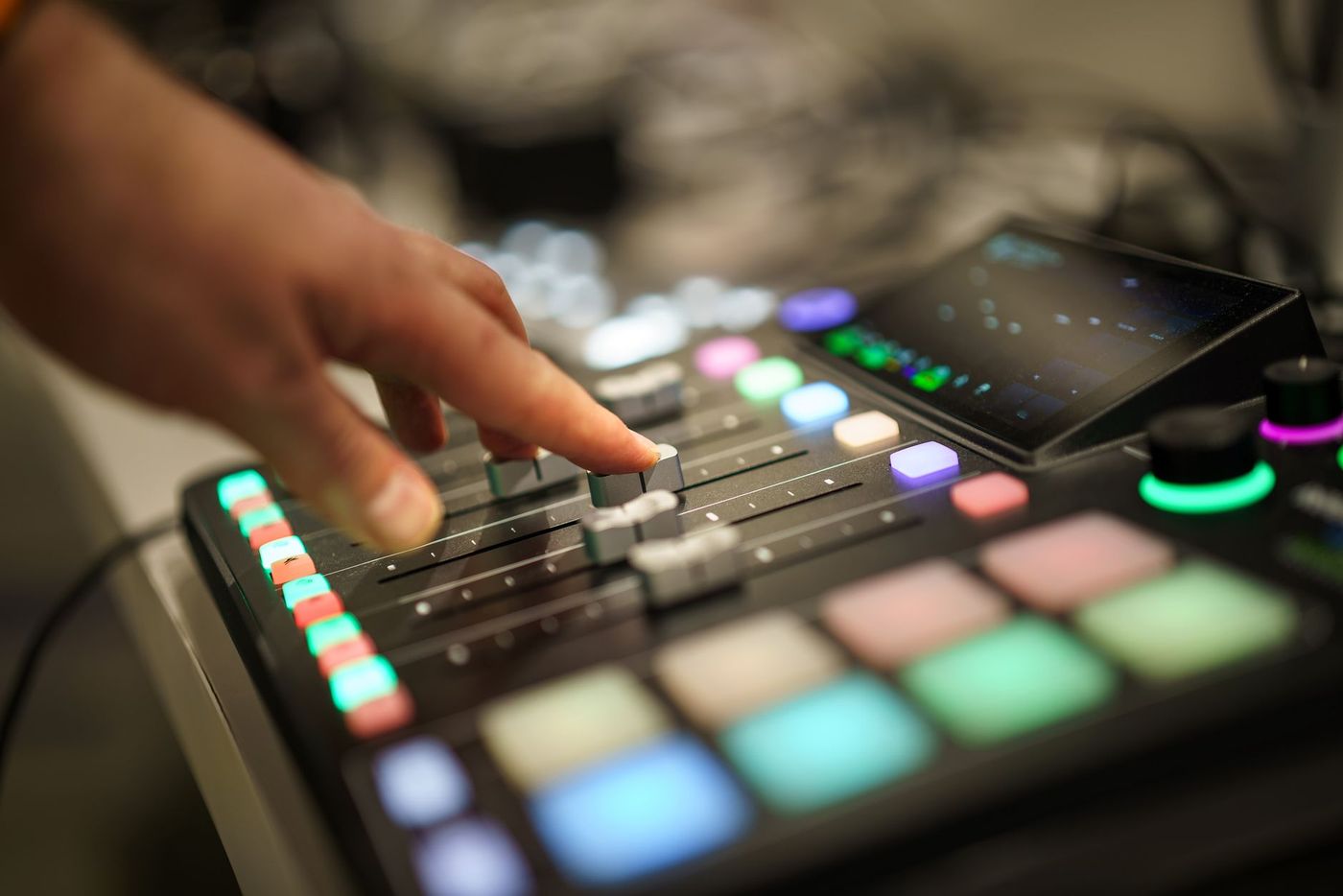
How do you beatmatch by ear, step by step?
Strip away the theory and it's five moves, in order:
- Cue the incoming track in your headphones while the live track keeps playing out front. Nobody in the room hears you doing this part.
- Get the tempo close with the fader, matching the BPM display or the felt tempo against the live track.
- Listen for drift on the kicks. Bring the cued track into one ear alongside the live track and hear whether the new kick is rushing ahead or dragging behind.
- Nudge the jog wheel to close the gap — forward for lagging, backward for rushing — until the kicks lock for a clean stretch, 8 to 16 bars with no correction needed.
- Bring the fader up and blend, then recheck phase after any big EQ move — cutting the low end hard can make a small drift feel worse than it actually is.
That's the entire mechanical skill. It takes most working DJs a few focused weeks to get reliable at it and the rest of a career to stop thinking about it consciously.
Sync isn't cheating — but it's only as good as the beatgrid
Sync isn't cheating. Bad track selection is. We've made that argument in full elsewhere, so we won't re-run it here — read the full case for sync if you want the whole thing, DJ Craze citation included.
What that argument doesn't spend enough time on: sync only works because the software already calculated a beatgrid for you, and that beatgrid is only as good as the file it was handed. Picture the USB stick a fill-in DJ hands you "to bridge the gap" — folder named "stuff," bitrates ranging anywhere from 96kbps to lossless, half the files untagged, one track sitting on the drive three separate times under three different names, none of it properly analyzed. Sync will happily lock onto a beatgrid built from garbage like that — confidently, at full volume, mid-set. Manual beat matching by ear is the fallback for exactly this moment, which is a Tuesday for most working DJs, not a hypothetical.
Phrase matching is the actual craft
Here's the hierarchy most guides won't put in writing: beat matching is the toll booth. Phrase matching is the actual road. A track isn't just a tempo — it's built like a sandwich, not a hierarchical compositional framework: intro, build, drop, breakdown, outro, arranged in 16- or 32-bar blocks. Getting the kicks perfectly aligned says nothing about whether you brought the new track in on the right bar of that structure.
Phrase matching — knowing a 32-bar phrase is about to end and landing the next track's energy exactly there — is what makes a transition feel inevitable instead of just technically correct. Anyone can hit sync and get two kick drums to line up. Counting to 32 without losing the plot, while also watching the floor and cueing the right track, is the part no software does for you. That's not a knock on sync users — a DJ using sync who nails phrasing beats a DJ beatmatching flawlessly by ear who brings tracks in mid-phrase, every time. The kicks were never the hard part. The bars were.
You can hear the difference even when you can't name it. A transition that lands on the first beat of a new phrase feels like the room exhaled at exactly the right second. The same transition landed four bars early or eight bars late still has perfectly matched kicks — and still feels like someone bumped the table. That gap between technically correct and actually good is where phrase matching lives, and it's the reason a beat matching guide that stops at tempo and phase is only telling you half the job.
Key matching — the quiet multiplier
Nobody asks about key matching in a beat matching guide, which is exactly why it belongs here. Harmonic mixing groups tracks by key compatibility, usually notated on a Camelot wheel, so two tracks blended together share a key or sit in an adjacent, compatible one. Stack it on top of tempo and phase and a transition stops just avoiding a clash — it starts sounding like one track was always meant to lead into the other.
Key matching doesn't replace phrase matching, and it definitely doesn't replace track selection. It's a multiplier that only pays off once the first two are already handled — a perfectly key-matched transition landed on the wrong bar still sounds like a mistake. Serato, Rekordbox, and Traktor will all guess a track's key for you. Trust it as a starting point, not a verdict; automatic key detection still misreads modal or non-standard tracks often enough that an ear-check before a big transition is worth the four extra seconds.
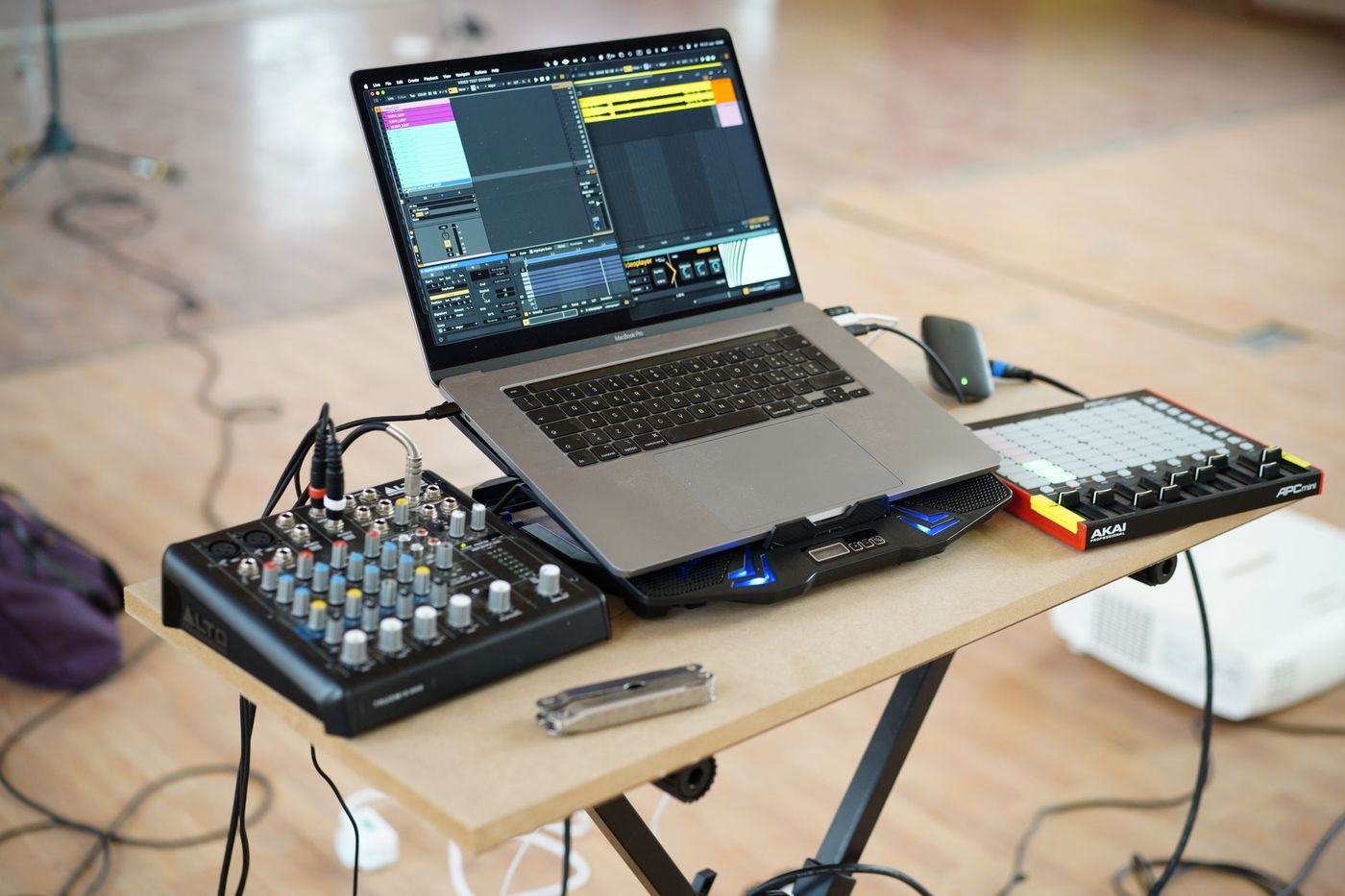
How do you practice beat matching without wasting a Saturday night?
Pick two tracks in the same genre, within a couple BPM of each other, and turn sync off on purpose. House in the 118–128 BPM range is a forgiving place to start — the tempo pocket is wide and the phrasing is predictable, which means you're isolating the skill instead of fighting the material. Count the phrase out loud through a full 32-bar section until it stops taking conscious effort; that's the habit that carries straight into phrase matching once the beat matching part goes quiet in your head.
Keep two or three genre pairings in your practice arsenal so you're not relearning the feel from zero every session, then widen the BPM gap and start crossing genres once the close-BPM version is boring. Deploy manual beat matching the moment a beatgrid looks even slightly off, rather than waiting for it to fail mid-transition. And get a cheap pair of open-back headphones for practice specifically — yes, that means owning two pairs of headphones for a job that already asks you to carry two decks and a mixer.

Frequently asked questions
Is beat matching by ear still worth learning in 2026?
Yes — not as the mark of a "real" DJ, but as a fallback. Gear fails, beatgrids come from unreliable files, and the DJ who's only ever pressed sync has no plan B when either happens mid-set.
How long does it take to get good at beat matching?
A few focused weeks gets most working DJs to a reliable basic lock — matching tempo and phase on same-genre tracks without conscious effort. Wide-BPM and cross-genre matching, plus the phrase-matching instinct on top of it, keeps improving well past that.
Do you need a controller, or can you learn on software alone?
Software alone can teach the theory — Serato, Rekordbox, and Traktor all have practice-friendly views. A jog wheel gives you tactile feedback on drift that a mouse or trackpad can't, so even an entry-level controller speeds up the feel considerably.
What's the difference between sync and beat matching?
Sync automates tempo and phase locking using the track's beatgrid. Beat matching by ear does the identical job manually. The output can sound the same; the difference only shows up when the beatgrid is wrong and one of you has a manual fallback.
Is phrase matching harder to learn than beat matching?
Generally, yes. Beat matching is counting a steady pulse. Phrase matching means tracking a song's actual structure — where the build starts, where the drop lands — which takes more listening reps before it becomes automatic. Counting bars out loud on tracks you already know is the fastest way in.
The bars were always the hard part
Beat matching by ear is worth having in your hands. It just isn't the thing that gets you rebooked. That's phrase matching, track selection, and reading a room that doesn't behave like your practice sessions — and once the kicks stop taking conscious effort, that's the part actually worth your attention.
If you want to hear what phrase-matched, key-matched sets actually sound like in a room, book a night through the homepage. The companion piece on how to read a crowd as a DJ picks up exactly where phrase matching leaves off, and more breakdowns like both live on the blog.
Image credits. All photos via Pexels under the Pexels free-to-use licence. Hero: Yan Krukau. Inline 1: Jakub Zerdzicki. Inline 2: Giuseppe Di Maria. Inline 3: Yan Krukau.